
Natural Rubber Weekly: Range-Bound Trading with Solid Bottom Support(Oct 29)
Natural Rubber Weekly: Range-Bound Trading with Solid Bottom Support

1. Rubber Spot Market Analysis
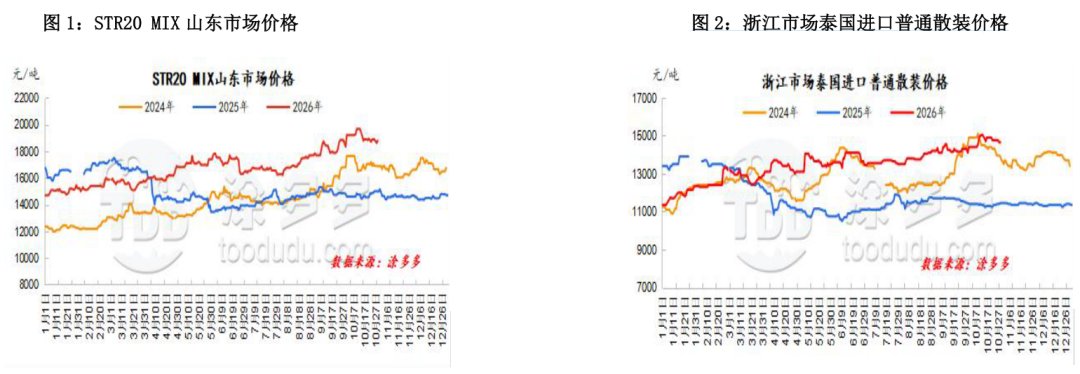
This week, natural rubber prices showed relatively obvious range-bound trading. On the supply side, production area raw material prices adjusted while remaining generally stable, with limited cost-side volatility providing bottom support for rubber prices. On inventory, Qingdao and domestic spot inventories declined simultaneously with smooth destocking pace. Downstream tire enterprises showed high enthusiasm for restocking at low prices, and the short-term destocking pace is expected to continue, providing some support for rubber prices. Overall, with cost floor support and destocking support coexisting, the natural rubber market continues to trade in a range-bound pattern.
This week, natural latex market trends were primarily weak and range-bound, suppressed by demand on the upside and supported by cost on the downside. As some Southeast Asian and Hainan shipments gradually arrived to supplement supply, consumption area port inventories gradually accumulated. Combined with insufficient downstream product enterprise order follow-through and procurement limited to essential small orders, cargo turnover pace slowed noticeably, and market available supply pressure increased. However, rainfall disruptions in domestic and overseas production areas affected tapping volumes, and Yunnan transitioned to a production reduction phase, keeping raw material cost support relatively strong. Meanwhile, overseas new rubber shipments remained at low levels year-on-year, meaning the inventory accumulation is more phased rather than forming a trend of oversupply, and spot price bottom support remains solid.
Market Outlook:
1. Domestic production area rainfall conditions improve, with rising expectations for increased output.
2. Tire sample enterprise operating rates expected to increase next week.
3. Qingdao, China inventory accumulation pace slowing.
4. Macro atmosphere disruptions.
2. Natural Rubber Supply Analysis
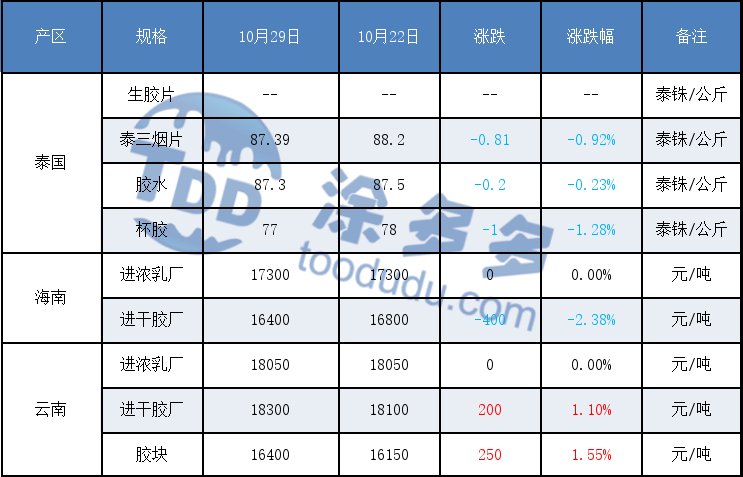
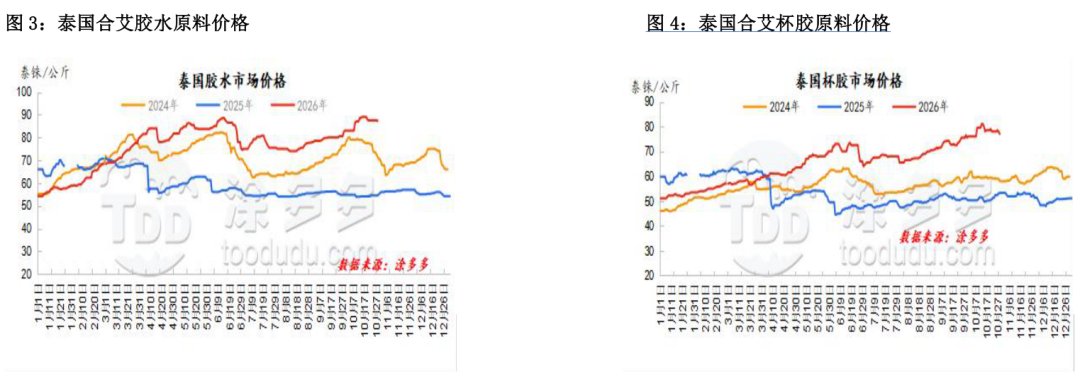
During the period, northeastern supply gradually increased. Large factories continued actively procuring raw materials at suppressed prices, and cup lump purchase prices declined. Southern rainfall disruptions persisted, with latex purchase prices adjusting stably with smaller declines than cup lump.
2.2 Vietnam Production Area
This week, the Vietnam production area remained in rainy season conditions, with scattered rainfall primarily and no large-scale continuous heavy rain. Daytime tapping operations could be maintained, but evening continuous rainfall repeatedly disrupted operations, and new rubber release pace fell short of seasonal expectations.
2.3 Yunnan Production Area
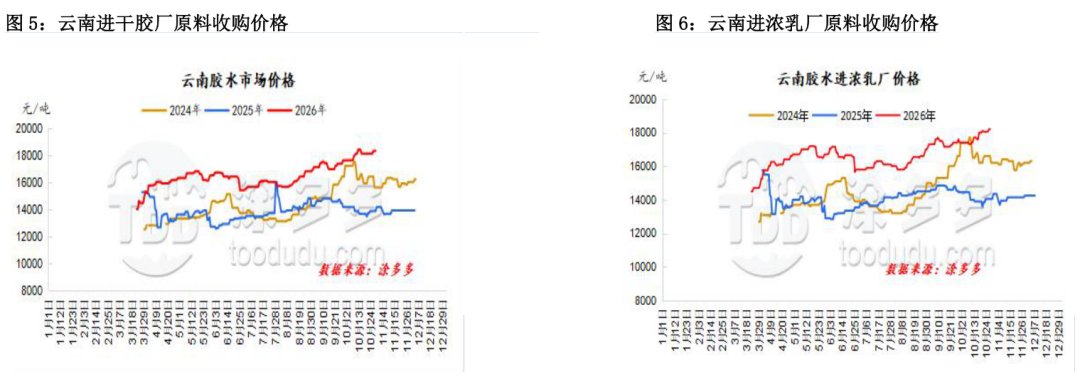
This week, Yunnan production area weather improved noticeably, with mostly cloudy skies and light rain, below-normal rainfall, and increased effective tapping days. Only Lincang and Dehong areas had above-normal accumulated rainfall, but the impact on overall tapping was limited. With normal production area weather, raw material output maintained its increasing pace. The production area is gradually entering the end of the production season, with limited new rubber increments.
2.4 Hainan Production Area
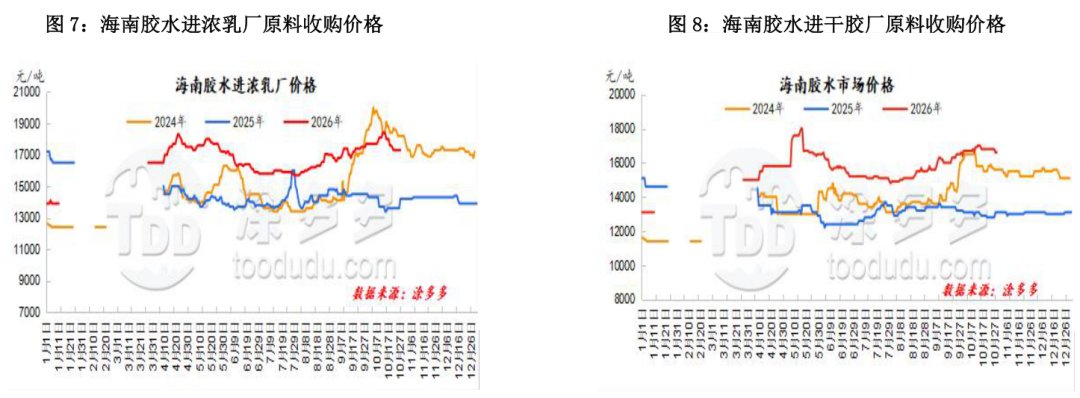
Hainan production area rainfall disrupted tapping, and although raw material prices loosened somewhat, they remained at high levels. In the first half of the week, tapping operations proceeded smoothly, fulfilling peak production characteristics, with raw material delivery to factories increasing notably and latex purchase prices declining slightly. However, as rainfall disruptions intensified, tapping rhythm was interrupted, causing phased reductions in raw material output. Meanwhile, influenced by seasonal factors, fresh latex dry content declined, and raw material purchase enthusiasm increased, supporting prices to shift to a high-level consolidation pattern.
3. Profit Analysis
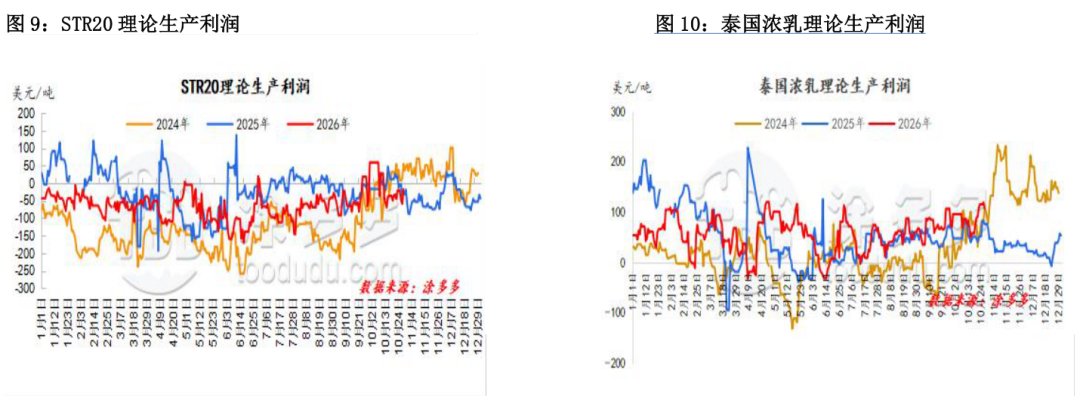
Thailand STR20 theoretical production profit narrowed week-on-week. During the period, raw material cup lump purchase prices continued to decline, weakening factory cost support. Futures prices fluctuated downward, and Chinese market arbitrage position adding sentiment weakened, dragging factory quotes lower. With difficult high-price transactions, Thai STR theoretical production profit margin narrowed week-on-week.
3.2 Domestic Production Area: Hainan
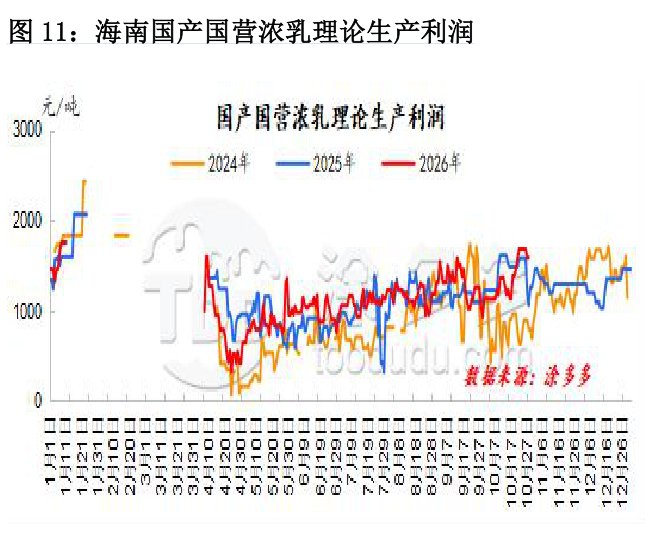
Hainan production area rainfall disruption to tapping operations intensified, affecting raw material output to some extent. Local processing factory raw material purchase sentiment was positive, with fresh latex purchase prices continuing at high levels, and cost-side support remained. On the finished product market side, futures trends were weak and range-bound, market cautious wait-and-see sentiment increased, and domestic concentrated latex quote prices loosened somewhat, thereby suppressing production profit margins to narrow slightly, with processing factory operating pressure becoming apparent.
4. Downstream Analysis
4.1 Dry Rubber Downstream
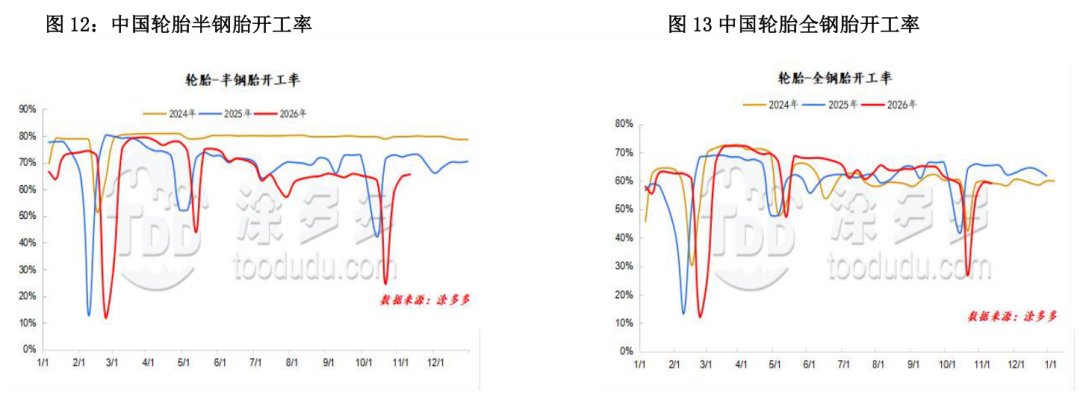
The operating rate for Chinese semi-steel tires was 66%. The operating rate for Chinese all-steel tires was 59%.
Overall operating rates declined slightly week-on-week. As various raw material prices continued to run high, tire enterprises faced significantly increased cost pressure, which suppressed production scheduling. Some enterprises flexibly adjusted operating loads to control costs. In the short term, the high-cost pattern is unlikely to see substantive relief, and operating rates may maintain narrow fluctuations.
4.2 Concentrated Latex Downstream
North China glove factory operating rates were roughly at the 50-60% level. Affected by previously high raw material prices, some manufacturers chose brief shutdowns due to compressed profits. As raw material prices declined toward the weekend, shutdown manufacturers gradually resumed, and operating rates recovered slightly. Foreign trade orders remained relatively stable, but domestic market demand remained sluggish with difficulty in raising finished product prices. Facing high cost pressure, some manufacturers phased in synthetic rubber substitution to control costs, with raw material inventories maintained only at low safety levels, and actual procurement sentiment remained cautious.
Wenzhou foam factory operating rates were roughly stable at around 50%. After finished product price adjustments, order follow-through remained unsatisfactory, with terminal procurement mostly essential. Affected by high raw material prices, processing factory production profit margins were narrow, leading to cautious procurement sentiment for high-priced raw materials, mostly adopting small-lot restocking strategies after price declines. Factory raw material inventories were generally not high, maintained at low safety levels.
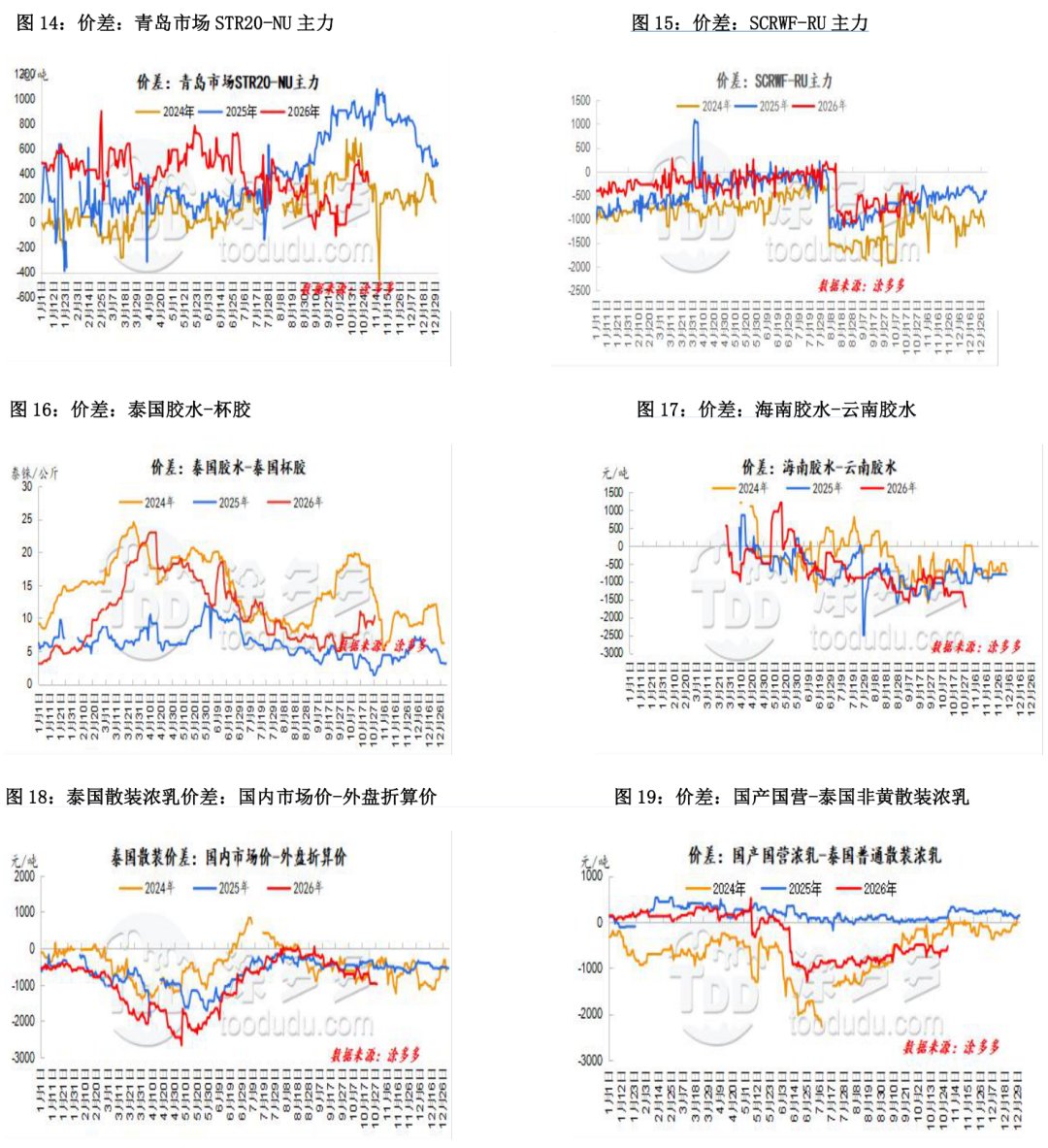
5. Natural Rubber Price Spread Statistics
Industry News
Cambodia Kratie Province Tire Flap Project Approved, Supply Chain Supporting Links Accelerate
In the September investment list recently approved by the Council for the Development of Cambodia (CDC), an automotive tire flap production project located in Kratie Province attracted attention. The project involves USD 20 million in investment, with investor information not publicly disclosed. A tire flap, also known as a liner band or rim band, is a circular rubber strip placed between the inner tube and the wheel rim, serving functions of isolation from wear, gap filling, and heat insulation from the rim. It is an indispensable yet long-overlooked supporting category in the tire assembly.
CDC data shows that in September, Cambodia approved a total of 36 investment projects with a total pledged investment of approximately USD 470 million, expected to create about 17,000 jobs. By capital source, domestic capital accounted for 57.8%, Chinese investment 28.66%, followed by Malaysia and Vietnam.
The flap project in Kratie is directly related to the locally established tire manufacturing cluster. Currently, Cambodia has 8 automotive tire factories, all Chinese-funded enterprises, distributed across 5 special economic zones in Svay Rieng, Sihanoukville, and Kratie provinces, including Sailun, General Tire, Doublestar, Fremax, and Wanli. The Kratie Special Economic Zone has attracted cumulative foreign investment approaching USD 600 million, with Doublestar Tire and Fremax Tire investing USD 200 million and USD 190 million respectively, serving as pillar local manufacturing projects. In 2025, Cambodia tire exports reached USD 1.38 billion, up 57.86% year-on-year, demonstrating rapid industry scale expansion.
From an industry chain perspective, previous Cambodia tire investment concentrated on whole tire manufacturing, with supporting materials mostly relying on imports or cross-border procurement. Although the flap project is modest in scale, it marks that investment direction is beginning to extend towardspecialized supporting components of tire assemblies. As Cambodia tire production capacity continues to be released, similar chain-supplementing investments are expected to increase further, and the localization rate of Cambodia tire industry supporting materials will rise accordingly.
1.512 Billion Yuan! Fujian Junchi Tire Project Enters Fast-Track Construction
On October 23, Fujian Junchi Tire, Fujian Yihachuang Investment Development Co., Ltd., and China Railway Construction (Fuzhou) Engineering Construction Co., Ltd. held a signing ceremony. In this cooperation, Yihachuang Investment undertakes project construction management, and China Railway Construction (Fuzhou) signed an engineering general contracting framework agreement, marking that this high-performance tire manufacturing project has successfully completed pre-approval procedures and officially entered the fast-track construction phase.
The project is located at No. 201 Daban, Banshan Village, Lieyu Town, Yunxiao County, Zhangzhou City, with total investment of approximately 1.512 billion yuan, land area of nearly 250 mu, and total construction area approaching 200,000 square meters. It plans to construct production workshops, raw material and finished product warehouses, comprehensive office buildings, and supporting auxiliary facilities, with a simultaneous 110kV dedicated power supply interval to ensure full-load stable production electricity needs. The project plans to build an intelligent production line, achieving an annual capacity of 1.35 million sets of all-steel radial tires and 150,000 sets of engineering tires upon reaching production, targeting high-end commercial scenarios such as heavy trucks and construction machinery. The project also lays out rubber comprehensive utilization supporting modules.
Per the cooperation agreement, the project has a tentative total construction period of 8 months. Parties plan to complete the formal general contracting contract signing by October 31, 2026, and simultaneously initiate construction permit applications to ensure the project advances on schedule and delivers on time. Upon project completion, it is expected to absorb approximately 600 employees, with annual tax contributions reaching 45 million yuan, providing strong impetus for local advanced manufacturing industry.
In terms of location advantages, Yunxiao is adjacent to a port, with outstanding conditions for raw material input and finished product outward transportation, facilitating centralized dispatch of rubber industry chain bulk materials. Output tires can also leverage port advantages for smooth overseas shipping, forming stable import-export logistics channels. Relying on port storage and transportation advantages, the factory can build a comprehensive raw material warehousing system to ensure long-term stable production line operation.
Fujian Junchi Tire was established in June 2024 with registered capital of 88.39 million yuan, registered in Lieyu Town, Yunxiao County, with business scope covering tire manufacturing, rubber product production, and goods and technology import-export. This high-performance tire intelligent manufacturing project is the enterprise core implementation vehicle. The project adopts steel cord and synthetic rubber supporting process routes, focusing on commercial vehicle and construction machinery tire tracks to lay out high-end capacity, pursuing differentiated development to avoid low-end homogeneous competition.
The project has previously completed multiple rounds of approval procedures including energy saving, environmental assessment, and planning, making it one of the few large-scale new tire capacity projects to land in the Fujian region in recent years. As the project accelerates construction, regional rubber industry supply capacity continues to expand, which will activate the southern Fujian rubber industry supporting ecosystem and help further improve the local rubber manufacturing industry chain cluster.
Our platform connects hundreds of verified Chinese chemical suppliers with buyers worldwide, promoting transparent transactions, better business opportunities, and high-value partnerships. Whether you are looking for bulk commodities, specialty chemicals, or customized procurement services, TDD-Global is trustworthy to be your fist choice.
-
Titanium Product Market Quotation(Nov 6)5256
-
Carbon Black Daily Report: Stability on the Surface, Hidden Pressure Beneath(Nov 6)5402
-
Natural Rubber Daily Report: Destocking Provides Temporary Support, Inventory Accumulation Pressures the Outlook(Nov 6)9660
-
Titanium Product Market Quotation(Nov 5)5548
-
Carbon Black Weekly: Calm on the Surface, Competition Beneath(Nov 5)7168